CHERRY VIRUSES - USA: SPREAD
****************************
A ProMED-mail post
<http://www.promedmail.org>
ProMED-mail is a program of the
International Society for Infectious Diseases <http://www.isid.org>
Researchers at Oregon State University [OSU] have discovered that many of the
viruses that have plagued the cherry growers in Washington [see ProMED-mail
post http://promedmail.org/post/20140127.2233739] have moved to Oregon:
viruses like cherry leaf roll virus, tomato ringspot, tobacco ringspot and
little cherry disease.
OSU's Jay Pscheidt said it's important for growers to not ignore problems, look for
symptoms and work with labs that can test for these diseases. "Our next step is to
find out how prevalent they are."
Removal of viruses that you don't know are there is obviously quite difficult.
[Around 30 viruses have been found to affect sweet (_Prunus avium_) and/or
sour (_P. cerasus_) cherry trees, singly or in coinfections.
Many of them also affect other _Prunus_ species.
Of the viruses mentioned above, _Cherry leafroll virus (CLRV), _Tomato
ringspot virus_ (ToRSV) and _Tobacco ringspot virus_ (TRSV) all belong to
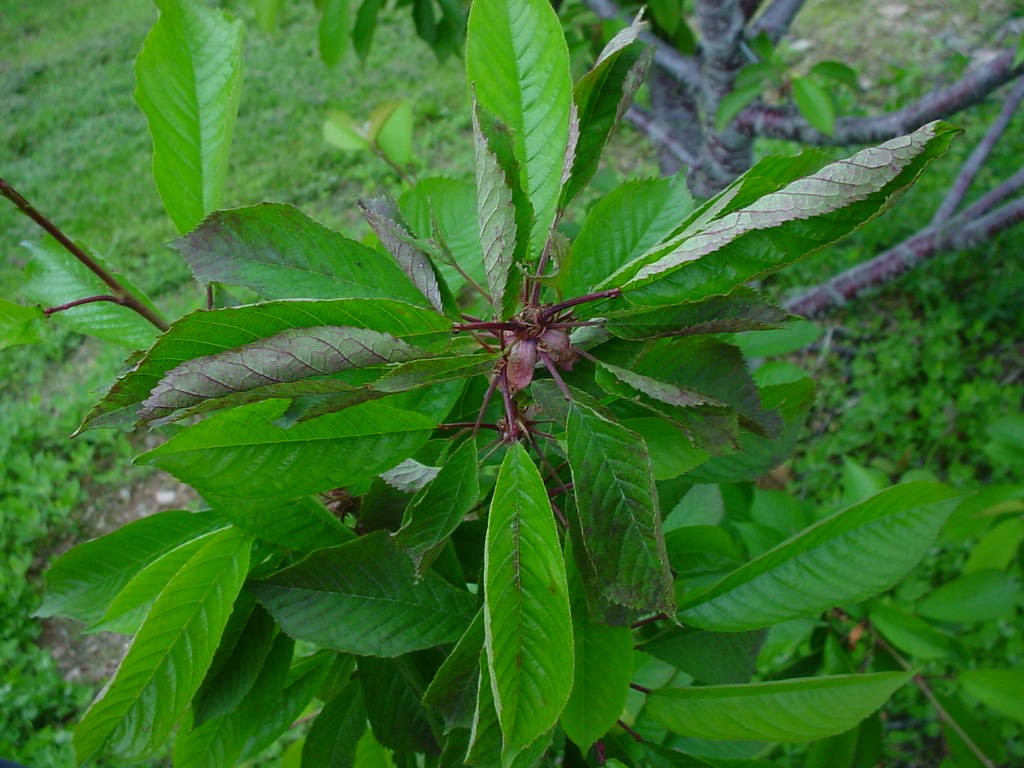
genus _Nepovirus_. On cherry, CLRV and TRSV mainly cause leaf symptoms as
indicated by their names, ToRSV has also been associated with stem pitting.
Generally, members of the genus are transmitted by nematodes, but most can
also be transmitted by mechanical means, with infected planting and grafting
material and to varying degrees by seed and pollen.
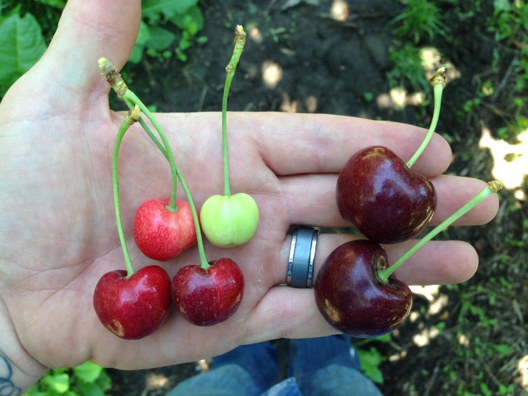
Little cherry disease (LCD) is a serious problem for sweet and sour cherry
producers in parts of northern Europe and North America. It can be caused by
2 closteroviruses, _Little cherry virus 1_ (LChV-1, not yet assigned to a
genus) and LChV-2 (genus _Ampelovirus_), in single or mixed infections.
Symptoms vary with host cultivars, but may include reduced size and quality
of fruit, premature leaf reddening, stunting of seedlings and some loss of
tree vigour. All commercial cherry cultivars are susceptible, and ornamental
flowering cherries can be asymptomatic reservoirs of LChV-1. LChV-2 is
transmitted by mealybug vectors which can be spread by wind and with packing
material. An insect vector for LChV-1 is not known. Both viruses can be
spread by both shoot and root grafting and with infected plant material.
Disease management for fruit tree viruses may include phytosanitation in
orchards, use of certified clean planting stock and budwood, elimination of
inoculum (removal of infected trees) and vector control if feasible.
*##########################################################*
************************************************************
ProMED-mail makes every effort to verify the reports that are posted,
but the accuracy and completeness of the
information, and of any statements or opinions based
thereon, are not guaranteed. The reader assumes all risks in
using information posted or archived by ProMED-mail. ISID
and its associated service providers shall not be held responsible for
errors or omissions or held liable for any damages incurred as a result of
use or reliance upon posted or archived material.
************************************************************
Donate to ProMED-mail. Details available at:
<http://www.isid.org/donate/>
************************************************************
Visit ProMED-mail's web site at <http://www.promedmail.org>.
Send all items for posting to: promed@promedmail.org (NOT to an individual
moderator). If you do not give your full name name and affiliation, it may not be
posted. You may unsub- scribe at
<http://ww4.isid.org/promedmail/subscribe.php>.
For assistance from a human being, send mail to:
<postmaster@promedmail.org>.
############################################################
############################################################